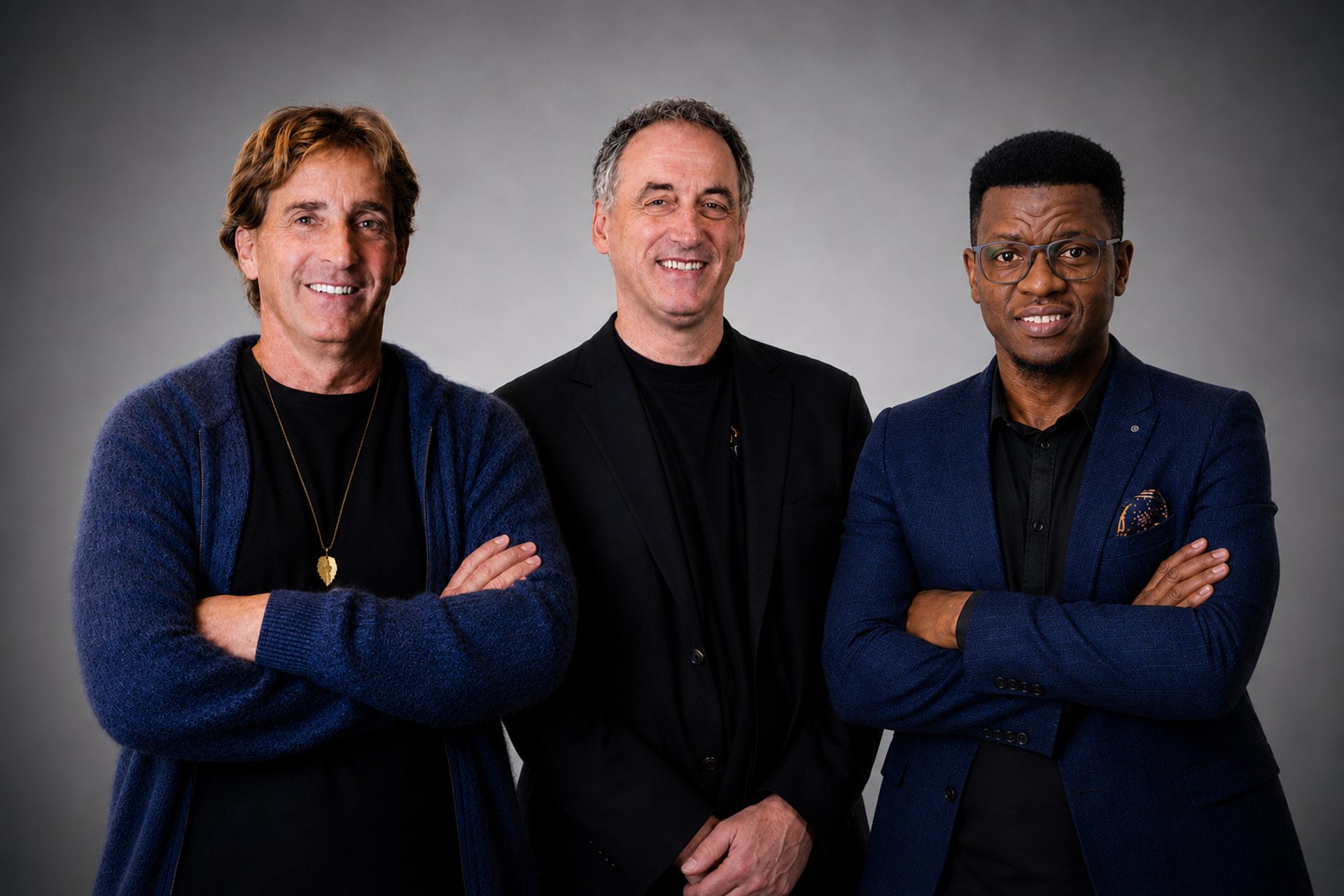
“Jan Henric Buettner sat down with BruvsChess Media on X Spaces, joined by Malcolm Pein, for a return interview focused on his vision for FIDE, including revenue growth, federation funding, transparency, tighter spending and a proposed 2030 Chess Olympiad in Africa. Here is what he said.”
The discussion covered his reasons for entering the FIDE presidential race, the federation’s finances, development funding, Africa, governance, transparency and what a Buettner-Pein administration would seek to accomplish during its first 100 days and four-year term.
Why Buettner is running?
Buettner traced his candidacy back to his entrepreneurial career and his relatively recent entry into the chess world. He spoke about his background in telecommunications, online services, venture capital and hospitality before eventually becoming involved with Magnus Carlsen and Freestyle Chess. Buettner said several leading young players, including Javokhir Sindarov, Nodirbek Abdusattorov, Bibisara Assaubayeva and Vincent Keymer, encouraged him to consider running for FIDE President after seeing what he had been able to accomplish commercially in chess.
He said he attracted $27.5 million for the Freestyle Chess project and believes his business experience could help unlock significantly greater commercial revenue for the wider chess ecosystem.
“I want FIDE itself to become strong and independent,” Buettner said.
He said he would take no salary as FIDE President and argued that he does not need the position as a career or as a source of political influence.
A direct attack on what he calls FIDE’s “patronage” system
One of Buettner’s strongest criticisms concerned what he described as a long-standing system of patronage inside FIDE.
He argued that the federation has historically depended too heavily on wealthy individuals and outside financial interests rather than building an institution capable of generating sustainable revenue on its own.
His message to voting delegates is also unusual by FIDE election standards.
Buettner said he does not want delegates to promise him their votes. He wants to present his plans and allow delegates to make their decision privately.
He also pledged that, if elected, he would represent all FIDE member federations equally regardless of which candidate they supported.
“Grow the pie“
He said chess has experienced enormous growth in recent years, particularly following the COVID period and the success of The Queen’s Gambit, but argued that FIDE has failed to commercially capitalize on that expansion.
Buettner compared FIDE with organizations such as FIFA, the FIA and the Olympic movement, which have built extensive relationships with global corporations, institutions and governments.
He believes FIDE can do much more with its brand.
Buettner also made several claims about FIDE’s current finances during the interview, including that its reserves have declined substantially and that sponsorship revenue remains extremely low. He also questioned the growth in personnel expenses.
Those financial figures were presented by Buettner as part of his campaign argument and were not independently verified during the conversation. His four-year target is clear: he wants FIDE’s revenue to reach at least three times its current level. He says he is willing to be judged against that target at the end of his term.
€10,000 to €15,000 for federations
One of the clearest policy proposals in the interview involved direct financial support for national federations.
Buettner said his team believes savings and increased revenue could make approximately €3 million available for federation development.
His proposal would initially provide federations with somewhere between €10,000 and €15,000.
More important to Buettner is the principle behind the payment.
That distinction goes directly to his criticism of patronage.
Rather than federations relying on personal relationships with FIDE leadership for assistance, Buettner wants a predictable system in which every federation knows what resources it is entitled to receive.
He cited a conversation he said he had with the President of the Panama Chess Federation, who told him that a children’s tournament received only $100 in FIDE assistance after an extensive application process.
Buettner presented the example as evidence that grassroots development funding needs significant reform.
Africa at the center of the campaign
Buettner, who says his main residence is in Africa and that he is a member of Chess South Africa, described the continent as close to his heart while also arguing that it remains the most underdeveloped region in the global chess ecosystem.
He wants the world’s chess community to come to Africa rather than requiring African players to repeatedly absorb the high costs of traveling abroad to access stronger competitions and players.
Buettner pointed to the major Freestyle Chess event staged in Cape Town as evidence that elite chess can successfully be brought to the continent.
He said approximately $3 million was spent on the event, which attracted players including Magnus Carlsen and Fabiano Caruana.
The next logical step, he argued, is the Olympiad.
An African Olympiad, Pein argued, could therefore leave something behind rather than simply disappearing once the final round ends.
Buettner described his personal integrity as the most important “capital” he brings to the presidential race.
He rejected the idea that Dlamini was selected simply to provide African or geographical representation.
Restructuring FIDE
No FIDE-funded business class
Buettner also promised tighter control of FIDE spending.