REPORT BY Abah Samuel E
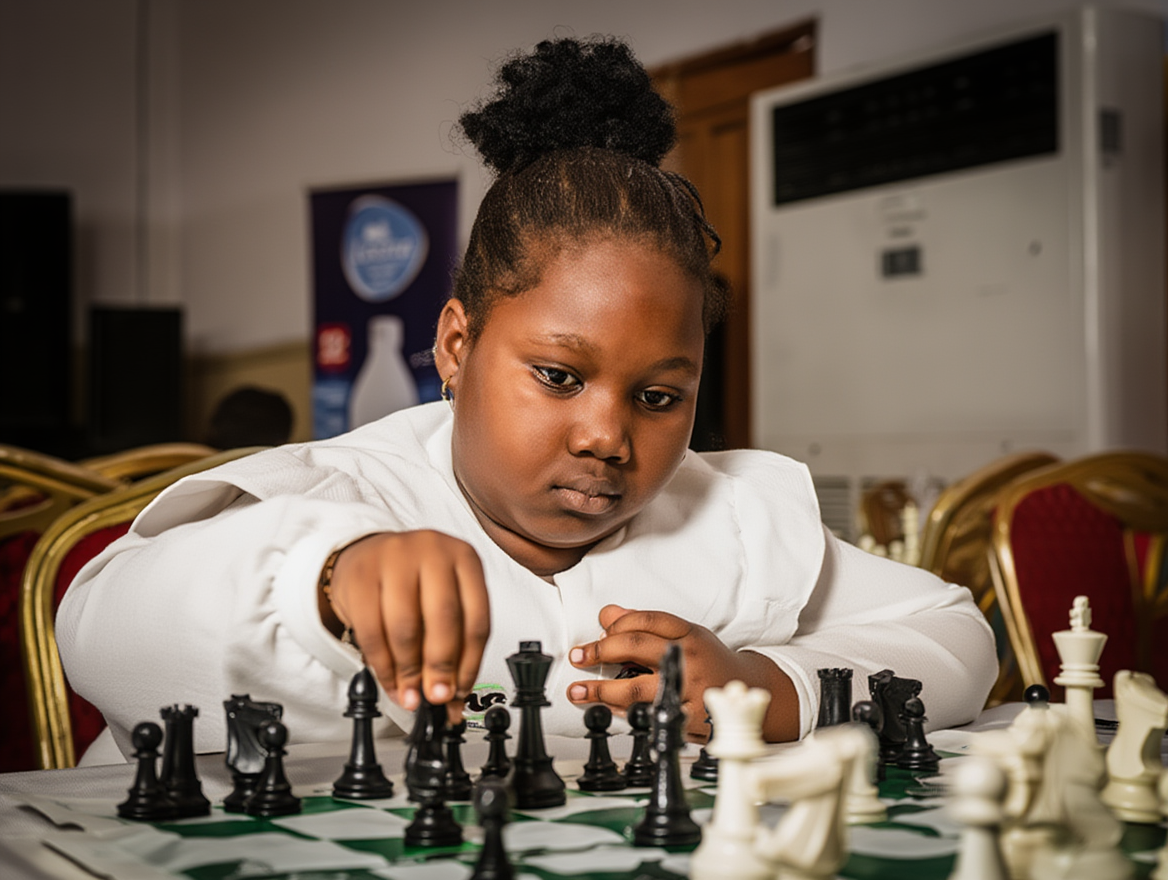
Day Three inside the playing hall felt like a pressure cooker. This was the day the young players had been preparing for; three rounds in one day, no hiding place, no second chances. By morning, it was clear this would not be a day for cautious chess.
If Day Two was about testing positions and settling nerves, Day Three was pure survival. Every move mattered. Every second on the clock carried weight. The excitement of the previous day gave way to sharp focus, as players understood that podium places would be decided not by reputation, but by endurance and nerve.
It wasn’t just an eventful day for the players; arbiters moved briskly between boards, starting clocks, recording results, and keeping order. Parents and coaches watched closely from the spectator areas, some refreshing pairings on their phones, others offering quiet encouragement between rounds. The tension was heavy, but the atmosphere was alive.
And the pressure was loudest in the oldest youth category (Under-20).
The U20 section delivered the most mature and strategically demanding chess of the youth categories. While many of the players are still building tournament experience, in the under-20 category, the ambitions were unmistakable. Games were approached with seriousness, caution, and a clear understanding of the stakes.
By Round Five, the picture at the top began to take shape. Players within striking distance of the lead pushed harder, while those slightly behind took risks, knowing that one strong result could change everything. The pressure showed on the boards: long thoughts, tightened grips on pieces, and clocks ticking louder than usual.
When the dust finally settled and the last clocks stopped, the standings spoke clearly. The leaders had held their nerve, and the podium places were decided. Yet the final standings ignored rating gaps entirely, proving once again that ratings don’t play moves, players do.
U20 Final Standings – Top 5
Final Ranking after 6 Rounds
| Name | RtgI | Pts. |
|---|---|---|
| AKINROGUNDE, Clinton | 2016 | 5 |
| BADRU, ARIYO | 1783 | 5 |
| JAMIU, Ninilowo | 1932 | 5 |
| NWANKWO, Victor Chibuikem | 1998 | 4,5 |
| OSAYANDE, Kingsley | 2123 | 4,5 |
With the Under-20 done and dusted, attention naturally shifted to the category that brought both brilliance and chaos in equal measure.
If entertainment was the measure, the U14 section delivered in abundance. These players are growing up on modern chess: YouTube lessons, online blitz, and private coaching, but tournament experience still varies widely. The result was fearless attacking chess mixed with moments of defensive collapse.
Games swung wildly. Strong positions were built and then suddenly thrown away. Brave sacrifices appeared on the board, sometimes sound, sometimes hopeful. But through it all, the confidence of this generation was clear. Nobody was afraid to take responsibility for their moves.
At the end of six demanding rounds, consistency rose above chaos, and the final standings rewarded those who combined courage with control.
U14 Final Standings – Top 5
Final Ranking after 6 Rounds
| Name | RtgI | Pts. |
| ADEKUNLE, Emilola | 1756 | 6 |
| EDWARD, Timileyin | 0 | 5,5 |
| JOSHUA, Bamidele | 0 | 5 |
| AGUSIONU, Chimaobi Kevin | 1669 | 5 |
| ADEKANYE, Adejuwon Arif | 1809 | 5 |
As the applause faded and the older juniors packed up, the youngest competitors were still buzzing with energy — and they provided the perfect closing chapter to the youth section.
If anyone needed a reminder of why chess is beautiful, the U10 section provided it. There was joy, curiosity, confusion, and excitement all rolled into one. Pieces were moved with confidence one moment, hesitation the next, but the enthusiasm never dropped.
Win or lose, the smiles were constant. Some children celebrated victories loudly, others accepted losses quietly, but all of them showed a genuine love for the game. Parents watched proudly, less concerned about results and more focused on effort and passion.
By the end of the rounds, even at such a young age, excellence still found its way to the top.
Final Ranking after 6 Rounds
| Name | RtgI | Pts. |
| UNUIGBOJE, Gabrielle | 1561 | 6 |
| EDWARD, Peculiar Oluwateniola | 1583 | 6 |
| IBRAHIM, Daniel | 0 | 5 |
| DARAMOLA, Amanda | 0 | 5 |
| AGUSIONU, Adaeze Zita | 1622 | 5 |
By the end of the day, as players and their families packed up boards, gathered their score sheets, and prepared to leave the venue, the impact of Day Three was written clearly on every face. Some walked away as champions, others with hard lessons learned about preparation, focus, and mental toughness. But without exception, every player left with more experience, a deeper understanding, and a stronger passion for chess than they had when they first arrived.
As these young players return to their homes, their clubs, and their training routines, they carry with them more than just results. They carry experiences that will shape them both as chess players and as individuals. Some will return next year, driven to improve on this year’s showing. Others may have discovered a lifelong love for the game, one that goes far beyond wins and losses.
And while the curtain has now closed on the youth section, the championship itself moves forward. Day Four will usher in the Masters and U2000 categories, even as the Invitational battles continue to unfold, promising more drama across the boards.
The Invitational: Pressure Rises as Margins Get Thinner
FM Bomo Kigigha came into Day Three with confidence after his masterful positional victory over FM Akinseye, but round-robin chess offers no comfort. Every opponent is dangerous, and every round is unpredictable.
Inside the playing hall, the tension was impossible to miss. IM Balogun, who had put in a solid performance on the opening match day, securing a draw in Round One and a win in Round Two, arrived early and fully focused, determined to prove that his resilience could translate into victories when it mattered most. At this level, the real question is not simply who can win, but who can remain composed under pressure and protect even the smallest advantage.
That question began to answer itself from Round Three.
Invitational – Round 3: Upsets and Missed Chances
On the top board, IM Oluwafemi Balogun (2194) and the veteran Abiola Daniel Akinseye (2238) played out a hard-fought draw in a Ruy Lopez Closed. Balogun pressed with space and queenside play, but Akinseye defended accurately, regrouping his pieces and neutralising White’s initiative. With neither side able to break through, the point was shared, a result that kept the race tight.
Elsewhere, the shock of the round arrived when Ajibola Olanrewaju (2179) stunned FM Abdulrahman Akintoye Abdulraheem (2317). A seemingly quiet Colle System spiralled out of control for the higher-rated player, and the veteran IM Olanrewaju punished every inaccuracy with ruthless precision. It was a reminder that at this level, mistakes are costly.
The result sent a ripple through the standings and set the tone for an even tougher Round Four.
Invitational – Round 4: Endurance, Errors, and Recovery
Round Four tested stamina as much as skill. FM Bomo Lovet Kigigha (2259) continued his strong run, surviving a chaotic Catalan against CM Tennyson Olisa (2279). Both sides made mistakes, chances swung back and forth, but FM Bomo held his nerve in the endgame, converting with calm precision after 70 demanding moves FM Bomo claims the victory.
The Women’s Section:
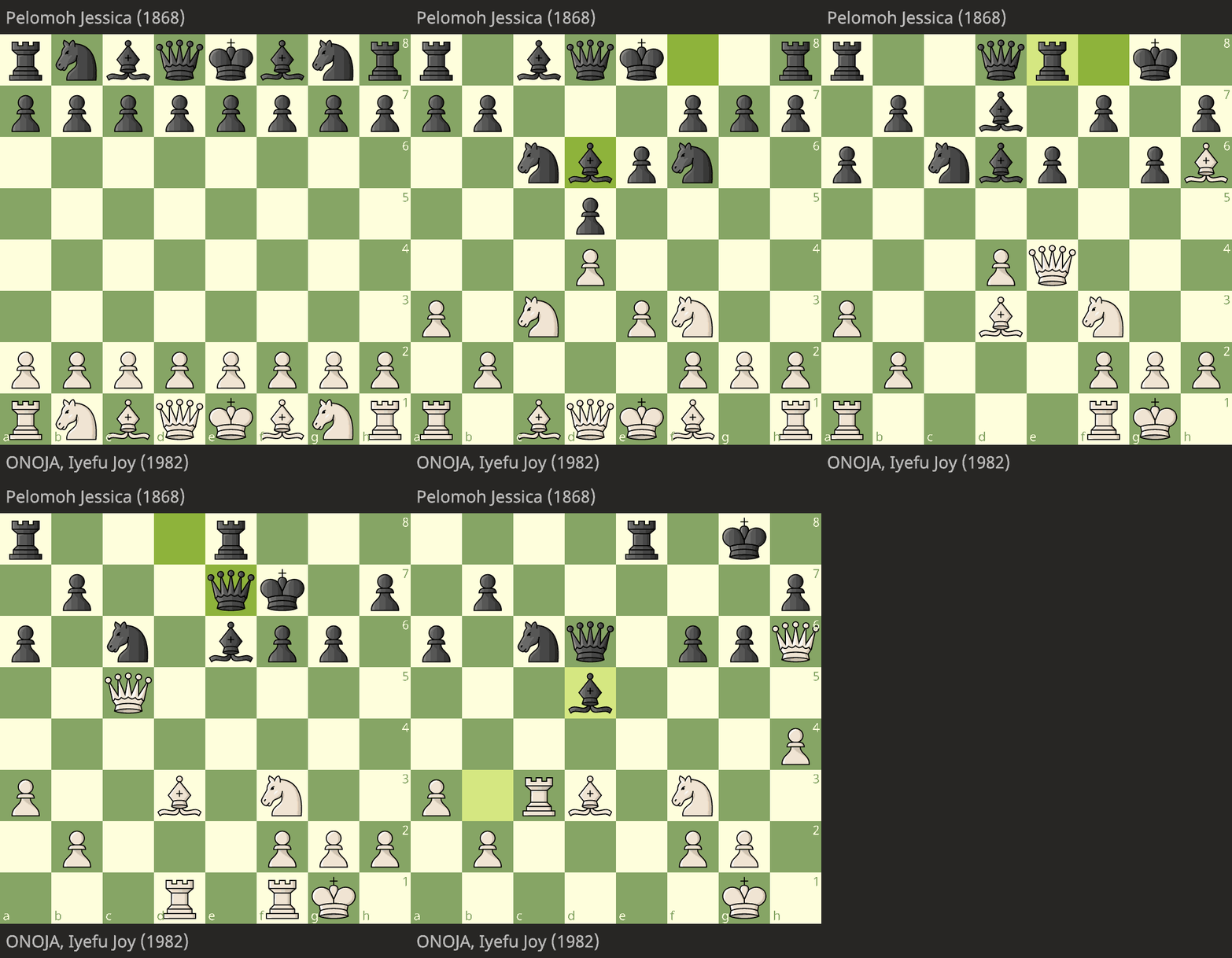
In the women’s section, Round Three delivered plenty of drama at the top boards. On board one, Iyefu Joy Onoja (1982) defeated Jessica Pelomoh (1868) in a Slav Indian that quickly turned into a tactical slugfest. After multiple exchanges in the middlegame, the position remained fairly balanced until Black’s critical mistake, 30…Ne5? opened the door for White. Although Onoja missed the immediate punishment with 31.Bc4+??, Pelomoh soon cracked under pressure, committing further errors with 31…Nxc4?? and 32…hxg6??. This allowed White’s queen to invade decisively via 33.Qxg6+, and after 34…Re5??, the final blow 35.Rc8+ forced resignation with checkmate looming.
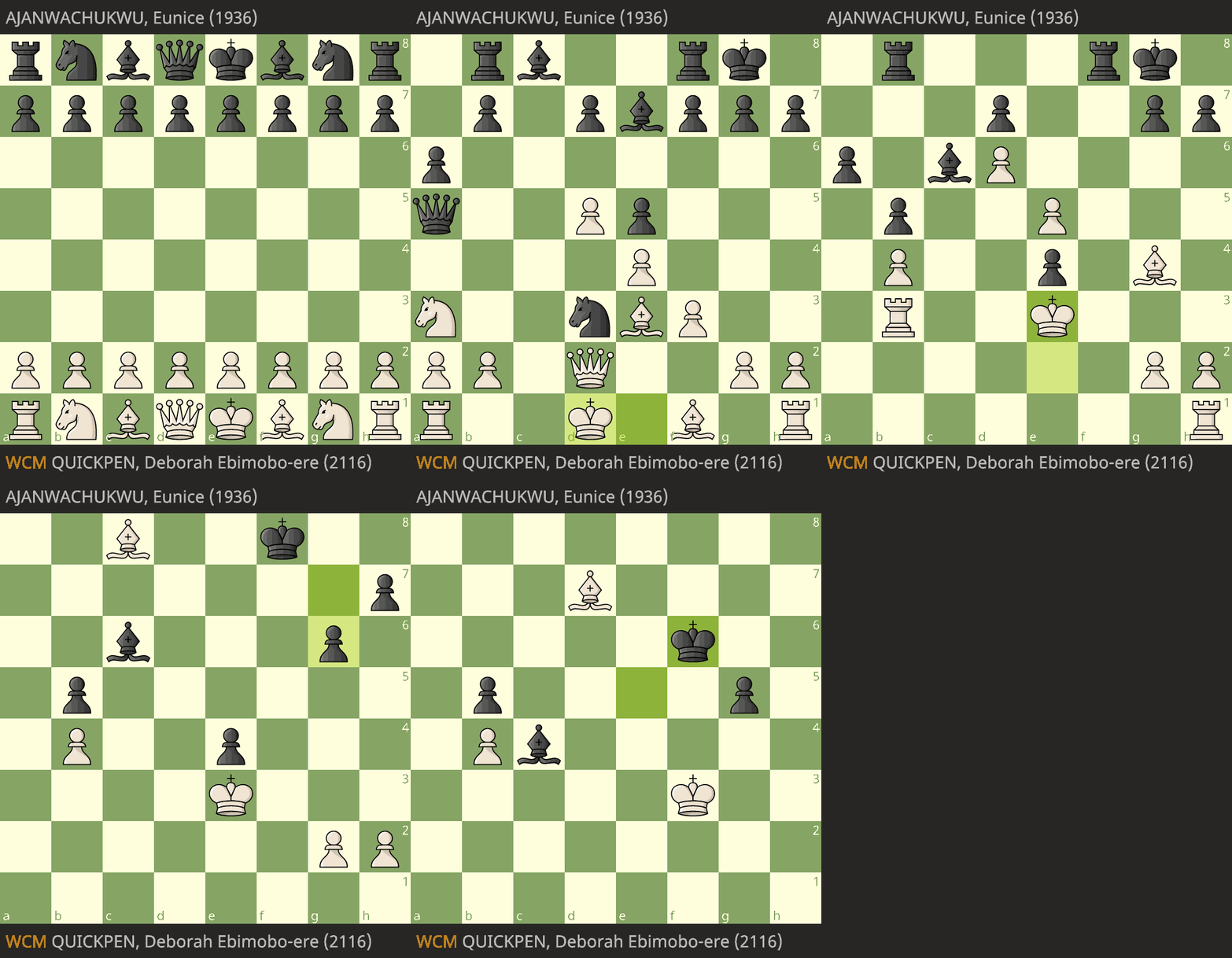
Elsewhere in Round Three, WCM Deborah Ebimobo-ere Quickpen (2116) fought to a hard-earned draw against Eunice Ajanwachukwu (1936) in a Sicilian O’Kelly that swung wildly from start to finish. The game was filled with tactical complications and notable inaccuracies from both sides, including 31.Rc7?? from White and earlier Black errors, such as 23…Bc6?? and 26…Nd5??. After the dust settled and pieces were traded down, the game transitioned into a tense endgame. Quickpen advanced her passed b-pawn to b6 and marched her king to c7, but Ajanwachukwu’s active bishop on e4 and dangerous passed g-pawn provided enough counterplay to secure a draw after 68 gruelling moves, a strong display of defensive resilience against higher-rated opposition.
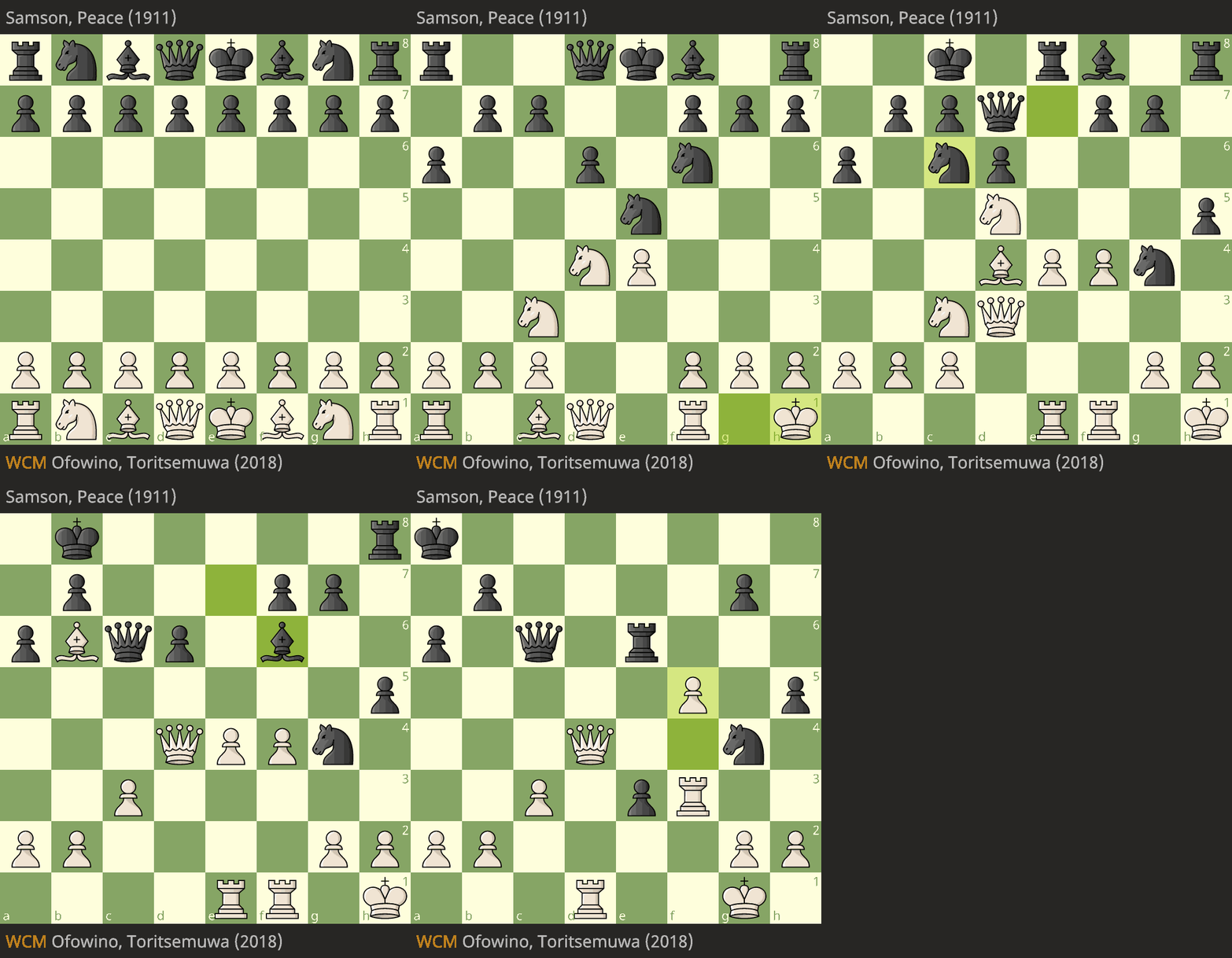
Round Four saw WCM Toritsemuwa Ofowino (2018) respond positively after her earlier setback, claiming a hard-fought victory over Peace Samson (1911) in a Ruy Lopez Steinitz Defence. Ofowino built a commanding position after 21.Nxc7 won the exchange and handed her a material edge. However, the game was far from smooth sailing. Blunders such as 38.Rf3?? and 41.h3?? allowed Samson dangerous counterplay, with a passed e-pawn reaching e2 and creating real threats. Just when it seemed Black might turn the tables, Samson’s critical error 44…Nxf3?? handed the initiative back. After 45.bxc5 Nxe1 46.Qb6+ and 47.c6, White’s advanced c-pawn and dominant queen proved decisive, forcing resignation with checkmate looming after 48.Qd8+. It was a resilient performance from Ofowino, who showed mental toughness to recover from her own mistakes and capitalise when it mattered most.
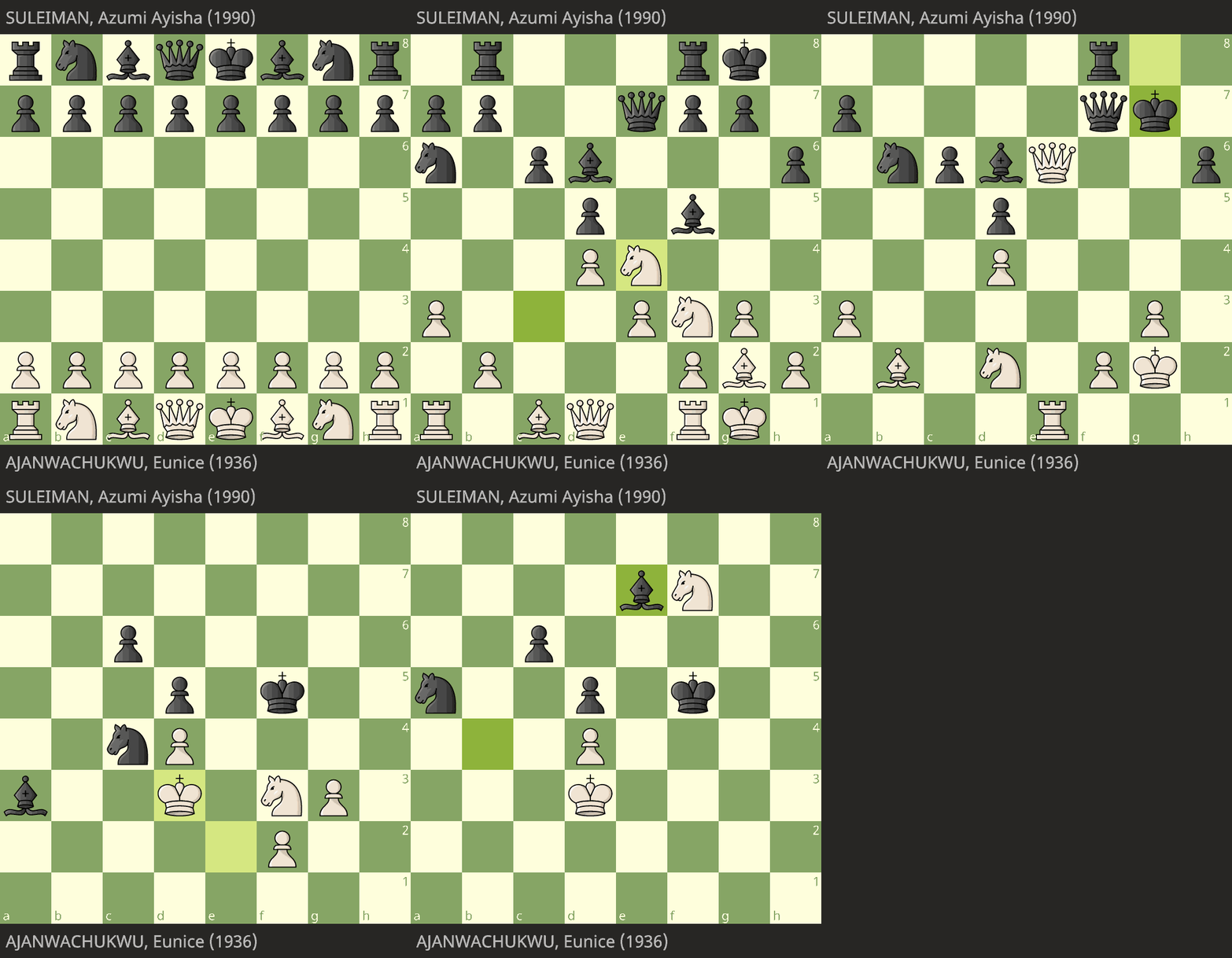
Also in Round Four, Azumi Ayisha Suleiman (1990) edged Eunice Ajanwachukwu (1936) in a tense Queen’s Gambit Declined encounter. The balance of the game shifted sharply after Black’s 23rd-move blunder (f4??) handed White a significant advantage. However, White failed to convert immediately, allowing Black to claw back into the game as it transitioned into the endgame. In the resulting knight-versus-knight struggle, Suleiman’s superior technique told, as she steadily advanced her pawns and forced resignation after 72 moves, with checkmate unavoidable.
The remaining Round Four games were just as competitive. Jessica Pelomoh and Sandra Omoruyi played out a dramatic draw in an Indian Defence, highlighted by a long perpetual check sequence beginning on move 42. WCM Deborah Quickpen bounced back with a win over Joy Erhabor in an English Opening, where White’s 19.Ne2?? allowed Black to seize the initiative, before a final blunder on move 38 sealed the result. Elsewhere, Abdulsalam Azeezat held WCM Michelle Nwankwo to a draw in a London System, while Iyefu Onoja and Bridget Michael shared the point in an Italian Game after White missed a winning chance with 31.Nf3 instead of the stronger 31.Rexe2.
With the intensity of Round Four complete, the women’s section now heads into a brief pause. The players will enjoy a well-deserved rest, regrouping both mentally and physically, before returning for the decisive battles that will determine the final standings of the championship.