

The Salesforce FIDE World Chess Championship 2026 remains evenly balanced after three classical games in Geneva. Defending champion Gukesh Dommaraju of India and challenger Javokhir Sindarov of Uzbekistan are tied at 1½–1½ as the players take their first rest day on Friday, 27 November.
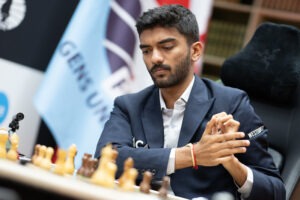
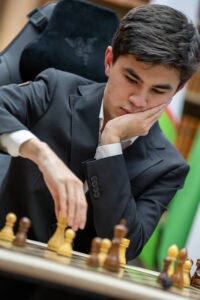
Both players are 20 years old, making this the youngest World Championship match in history. Gukesh, born on 29 May 2006 in Chennai, became the youngest undisputed world champion in 2024 when he defeated Ding Liren. Sindarov, born on 8 December 2005 in Tashkent, qualified by winning the 2026 Candidates Tournament unbeaten after earlier claiming the 2025 FIDE World Cup. He turns 21 during the match, on the scheduled date of Game 12.
The match is being played at the Fondation Martin Bodmer in Cologny, on the outskirts of Geneva, Switzerland. It consists of a maximum of 14 classical games, with the first player to reach 7.5 points winning the title. The time control is 120 minutes for the first 40 moves, followed by 30 additional minutes, with a 30-second increment starting from move 41. The prize fund is US$2.5 million. Each player receives $200,000 for every game won, with the remainder split equally, subject to specific fixed splits in certain decisive outcomes or if the match is decided by tiebreaks.
Colours were drawn at the opening ceremony on 22 November. Sindarov has the white pieces in odd-numbered games; Gukesh has them in even-numbered games. All classical games begin at 15:00 CET (19:30 IST).
The Games So Far
Game 1 (24 November) saw Sindarov open with 1.e4. Gukesh replied with the Berlin Defence. The game lasted 38 moves before ending in a draw by threefold repetition. The match score stood at ½–½.
Game 2 (25 November) was Gukesh’s first outing with the white pieces. He chose the London System. Sindarov equalised comfortably, and the players repeated moves to draw after just 20 moves. The score moved to 1–1.
Game 3 (26 November) proved the longest and most competitive so far. Sindarov again opened 1.e4, and Gukesh returned to the Berlin, this time choosing the rare 5…Be7 (Rio de Janeiro Variation). The surprise left Sindarov less deeply prepared. Gukesh built a significant time advantage, while Sindarov reached the move-40 time control with only seconds remaining. Despite the pressure, Sindarov defended accurately. The game entered an opposite-coloured bishop endgame and concluded in a draw after 60 moves, lasting nearly five hours. The match score is now 1½–1½.
In the post-game press conference, Sindarov acknowledged that Gukesh had been well prepared in the opening. Gukesh expressed satisfaction with his team’s work on the line and with the extra time on the clock.
Looking Ahead
Friday is a rest day. Game 4 begins on Saturday, 28 November, at 15:00 CET, with Gukesh again holding the white pieces. The remaining scheduled classical games run through 11 December, with additional rest days on 1, 5 and 9 December. Tiebreaks, if required, are set for 12 December.
Neither player has yet scored a full point. The early games have shown careful preparation and mutual respect, with Game 3 demonstrating that the match can produce prolonged, high-level fighting chess. With Gukesh due to play White again on Saturday, both camps will use the rest day to analyse the opening choices so far and refine their plans for the next phase.